![[Translate to English:] Florian Wirth](/fileadmin/_processed_/5/4/csm_florian_wirth_be3c7f1b24.png "[Translate to English:] Florian Wirth")
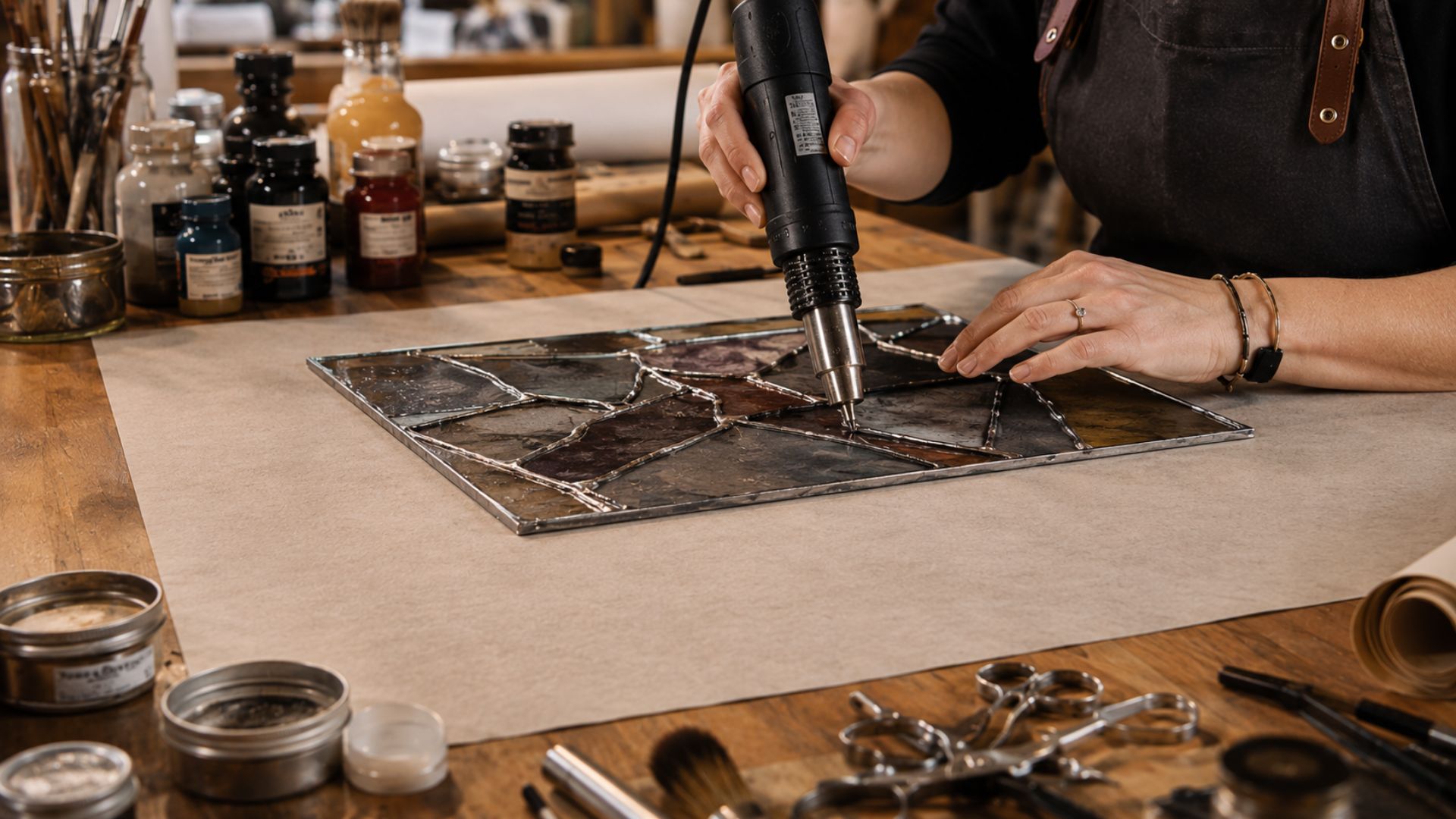
A studio is a creative space – yet many of the materials and techniques used there carry an elevated fire risk that is easily underestimated in everyday work. Heat guns, soldering irons, open flames during encaustic painting, or the handling of highly flammable solvents and resins: all of this is part of daily practice for many artists, craftspeople and hobbyists. At the same time, many studios store flammable materials such as foam, textile fibres or rolls of paper – often in close proximity to heat sources.
The most important facts about BRANOflame in the studio at a glance
- BRANOflame is a flame-retardant speciality paper based on kraft paper – certified flame-resistant and tested for safety-critical applications.
- As a protective underlay during hot work such as soldering, pyrography, wax techniques or welding, it can effectively help reduce fire risk in the studio.
- The paper absorbs solvents, resins and spray paints, keeping work surfaces clean – without time-consuming cleaning afterwards.
- According to the product information, BRANOflame is safe for health and recyclable – it can be disposed of via waste paper or residual waste depending on local requirements (waste code 150101).
Why Fire Safety Is Essential in the Studio
A studio is a creative space – yet many of the materials and techniques used there carry an increased fire risk that is easily underestimated in everyday practice. Heat guns, soldering irons, open flames during wax painting, or handling highly flammable solvents and resins: all of this is part of the daily routine for many artists, craftspeople, and hobbyists. At the same time, many studios store combustible materials such as foams, textile fibers, or paper rolls – often in close proximity to heat sources.
Common Hazard Sources in Art Workshops
The combination of heat sources, flammable liquids, and easily combustible materials makes the studio a work environment that requires particular attention to fire safety. Sparks from soldering or welding can be enough to ignite paper, fabric, or escaped solvent vapors. Spraying with aerosol paints or thinning resins can also produce volatile, flammable vapors that may accumulate unnoticed.
In addition, many studios are located in buildings subject to specific fire safety regulations – for example, rented commercial spaces, shared workshops, or publicly funded creative centers. Anyone working in such spaces bears responsibility not only for their own safety, but also for that of other users and for the building itself.
What Fire Safety Requirements Demand for Studios
Depending on the type of use and building, fire safety requirements may stipulate that combustible materials be stored only in limited quantities, that flammable working substances be kept securely, and that work areas be equipped with suitable protective measures. Flame-retardant underlays and covering materials can be a useful addition to fire safety measures. Whether they contribute to meeting specific fire safety requirements in a given application should be assessed based on local regulations.
BRANOflame as Potential Support for Fire Safety Concepts
BRANOflame is a flame-retardant specialty paper based on kraft paper, developed by BRANOpac specifically for applications with elevated fire safety requirements. The paper features a coating with a flame-retardant solution and complies with the regulations of official material testing authorities regarding the flame resistance of paper for use in spaces with building safety requirements. For CF9 quality, BRANOflame is classified as M1 under UNE 23-727-90 according to current product specifications. Whether this documentation is sufficient for a specific fire safety concept should be assessed on a case-by-case basis with the landlord, insurer, or relevant authority.
Technical Properties at a Glance
BRANOflame combines several properties that distinguish it from conventional protective paper. It is not only flame-retardant but also electrically conductive – which helps prevent static buildup, a factor that is particularly relevant when working with solvent-based substances and spray paints. In addition, BRANOflame reliably absorbs liquids such as varnishes or overspray, keeping work surfaces clean and avoiding the need for extensive cleanup. The combination of absorbency and flame-retardant properties can make BRANOflame an interesting option for various spraying applications.
Practical for studio use: BRANOflame can be cut, folded, glued, and die-cut – making it flexible enough to adapt to different work surfaces and application scenarios. BRANOflame can be used as an underlay or cover, for example to separate work areas from adjacent materials. Custom printing is also possible, for instance for labeled storage or safety zones. According to product information, the material is safe for health and recyclable.
Available Formats and Customization
BRANOflame is available as roll or sheet stock (working widths of 100/150 cm) and can be supplied in custom formats as well as die-cut pieces. Depending on the version, for example, CF9 is available at 97 ± 7 g/m²; other versions are available upon request. BRANOpac also offers individual solutions – for special requirements regarding format, weight, or printing, direct consultation is recommended.

Do you work in a studio involving hot processes, solvents or flammable materials and want to effectively reduce your fire risk? We are happy to advise you – without obligation and tailored to your needs. Get in touch with us and find out which BRANOflame solution is right for your working environment.
Get in touch nowBRANOflame is a flame-retardant speciality paper based on kraft paper with a flame-resistant coating. Unlike ordinary protective or packaging paper, it has been tested to the requirements of the official materials testing authorities for flame-retardant papers and carries the M1 fire classification. It is also electrically conductive, absorbs liquids and is recyclable – properties that conventional protective papers do not typically offer.
BRANOflame is suitable as a protective underlay for a wide range of hot work activities typically carried out in studios and workshops: working with heat guns, soldering, pyrography, wax techniques such as encaustic, and small welding tasks in hobby and art settings. The paper can be laid under the workpiece or used to cover adjacent areas in workspaces where heat is used or sparks may occur.
Yes. BRANOflame reliably absorbs liquids such as paints, resins and solvents and helps prevent them from spreading widely across the work surface. The flame-retardant coating means the paper is flame-resistant. Its electrically conductive property also prevents static build-up, which can be an ignition risk when handling solvent-based materials.
BRANOflame meets the requirements of the official materials testing authorities for flame-retardant papers and carries the M1 fire classification. It can therefore be put forward as a relevant technical reference in safety concepts. Whether it is suitable for a specific fire safety concept should, however, always be verified in consultation with the responsible fire safety officer or the competent authority. BRANOpac is happy to provide individual advice.
BRANOflame can be cut to size and used as a separating interlayer between stacked or closely stored combustible materials such as fabrics, foams or rolls of paper. The paper is easy to handle – it can be cut, folded and replaced as needed.